Flat hose
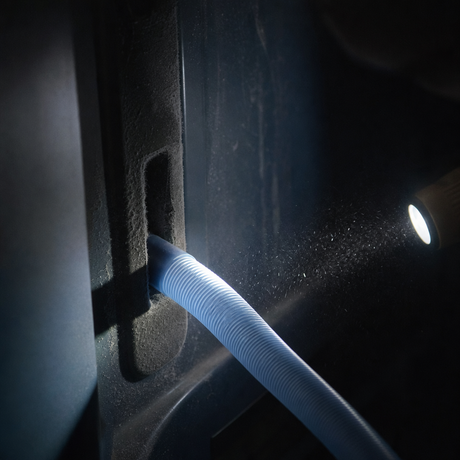
Enters the lint trap slot and follows the bend
The reach

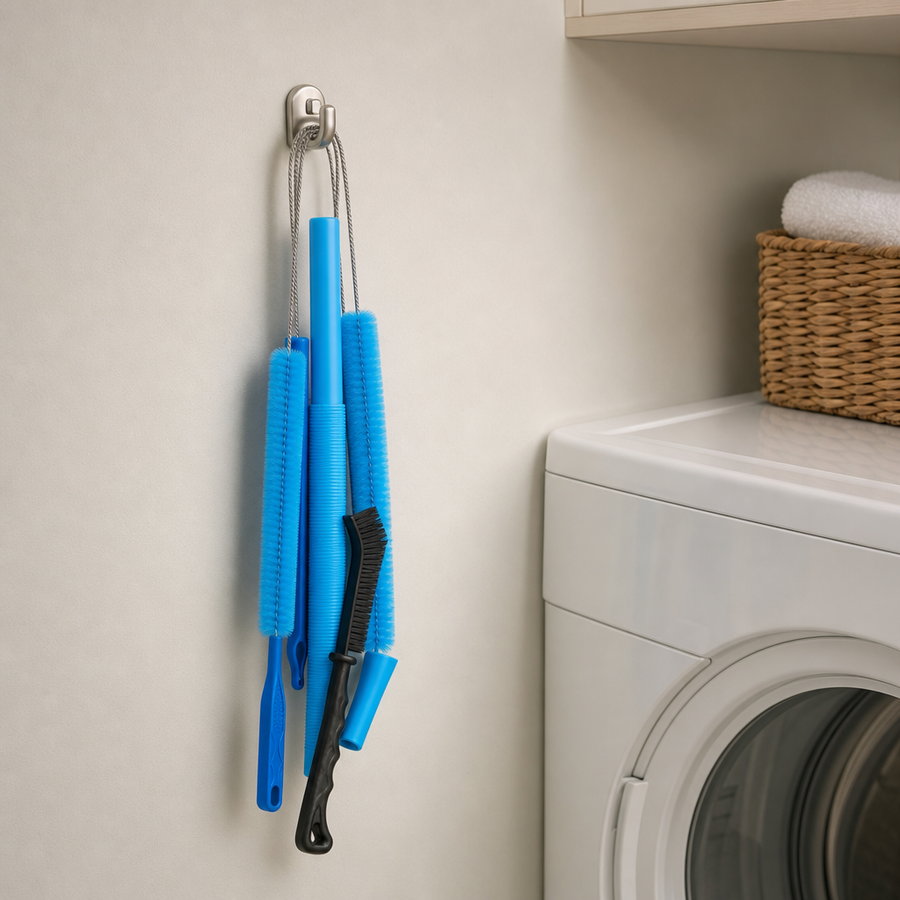
Dryer vent cleaning kit
Deep Reach turns the vacuum you already own into a flat, flexible cleaning tool that pulls hidden buildup from below the lint screen.
Unplug the dryer first. This handles the lint trap cavity and the near run, which is the section that fills fastest. The long run to the outside wall stays a professional job.
Free over $79, otherwise $9.95. Orders leave in 1 to 2 business days and arrive in 7 to 12.
Sixty days. Use it on the real thing first.
The reason to clean beyond the screen
NFPA estimated 13,820 home structure fires per year involving dryers from 2014 to 2018. Failure to clean caused 32%, and 27% began when dust, fiber or lint ignited. Deep Reach gives your vacuum access to the hidden lint-trap cavity and reachable near section the screen and ordinary crevice tools leave behind. It does not clean the full exhaust run or dryer chassis, and persistent blockages still need professional service.
The kit
The flat hose handles the narrow space below the lint screen, where suction removes. The brushes handle the reachable round duct opening behind the machine, where agitation and reach matter.
Enters the lint trap slot and follows the bend
The reachGrips your vacuum hose by tension so the joint does not leak
The sealThe round duct run behind the machine
The reachThe vent mouth and the screen slot edges
The detail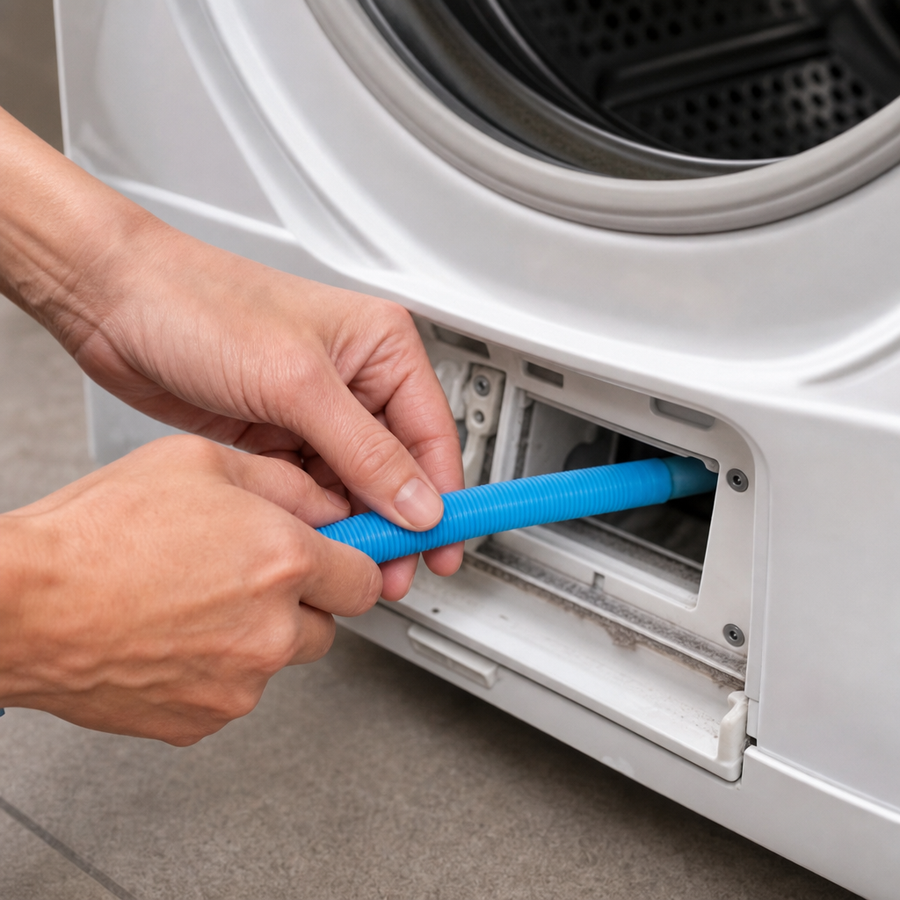
What the lint screen misses
The removable screen catches lint, but it is not a seal. Fine lint can slip past it and collect in the narrow cavity underneath.
A normal crevice tool is too wide and rigid to follow that narrow path. Deep Reach is flat and flexible, so the vacuum you already own can reach inside and pull the buildup back out.
Same vacuum. A shape that fits the space.
How it gets there
The hose is flat rather than round in cross section, and flexible enough to follow the bend at the bottom of the well without collapsing under suction. It enters the slot the way a round tool cannot.
The stretch sleeve at the top rolls back over your own vacuum hose and grips by tension, so the suction arrives at the tip instead of leaking at the joint. A flat hose with a leaking joint has no suction where it matters.
The power is yours. We only sell the reach.
Using it
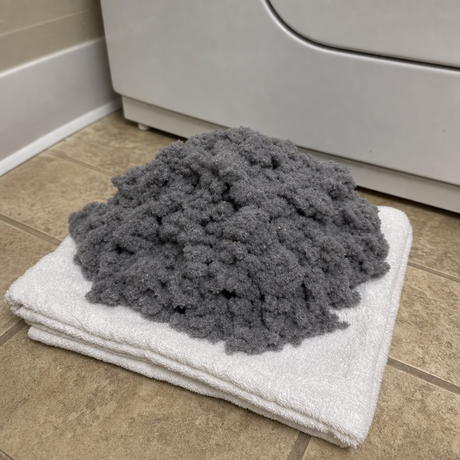
The first time is the one people photograph. Years of packed lint out of a machine that looked clean, often a full canister.
After that it is a fifteen minute job on a schedule. People put it next to the smoke alarm check rather than treat it as a repair.
This is not a gadget that gets used once. It ends up on the monthly list next to the smoke alarm.
How to use it
Unplug the dryer, remove the lint screen, roll the stretch sleeve over your vacuum hose, then guide the flat end into the cavity. Use the brushes for the reachable round section behind the machine.
Lift the lint screen and look at the slot it came from. That is the cavity.
Roll the stretch sleeve back over the end of your own hose so the joint is sealed.
Feed the flat hose into the slot and let it follow the bend. Take your time on the first pass.
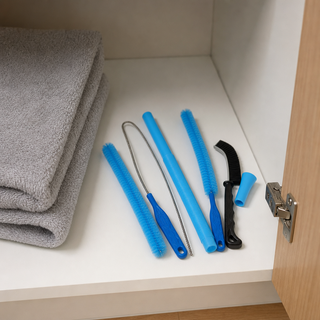
Run it on your own dryer. Sixty days, and if it does not pull out more than you expected, we will make it right.
Questions
The stretch sleeve rolls over the end of a vacuum hose and seals by tension. Exact hose compatibility varies. If the sleeve does not fit yours, the kit is covered by the sixty-day guarantee.
No. It handles the lint trap cavity and the near section of the run, which is the part that fills fastest. The full run to the outside wall is a professional's job.
Most people settle on once a month, or alongside the smoke alarm check. If a load has started taking two cycles to dry, do it sooner.
The hose is flat rather than round, which is what lets it into the slot the screen sits in. On a front loading trap or a top mounted one, it follows the bend rather than stopping at it.
Unplug the dryer before cleaning around it. This attaches to a household vacuum and has no power of its own. It cleans the lint trap cavity and the near section of the duct, not the full run to the outside wall, and it is not a substitute for a professional duct cleaning where one is needed.