Rotary blade
Does the cutting, so your grip does not have to
Powered

CutPilot Pro Electric Scissors
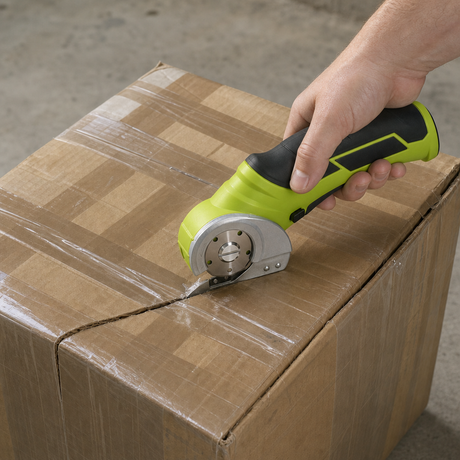
You do not cut cardboard often. That is exactly why it is annoying when you do: scissors stall on thick board and a box cutter makes your grip do all the work. This powered rotary blade supplies the cutting force while your hand guides the line.
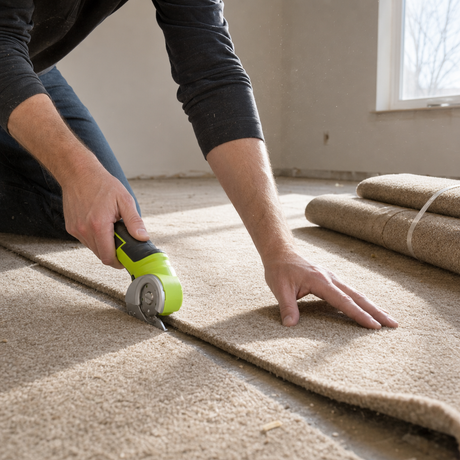
Straight lines are its thing, so keep your shears for tight curves. Separate carpet from its padding first, because padding clogs it.
Orders leave in 1 to 2 business days and arrive in 7 to 12. Shipping is calculated at checkout.
Sixty days. Use it properly first.
In the field
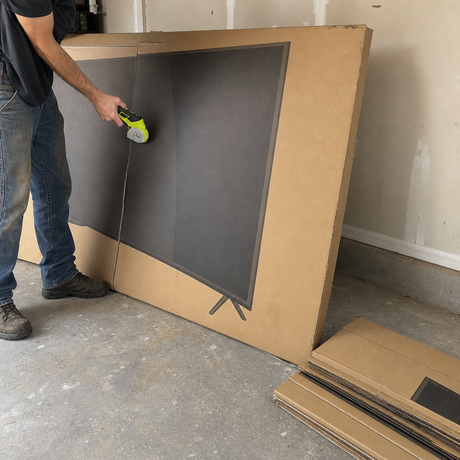
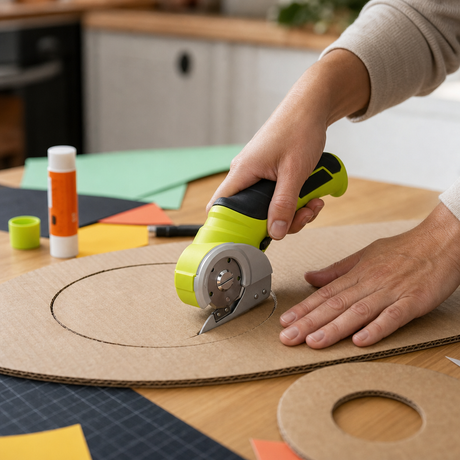
The oversized TV box. A room of carpet. The parcel wrapped in half a roll of tape. The school project that needs sixty cardboard circles by Monday.
The tool
There is no clever chemistry here. It is a small rotary blade, a guard, a switch and a grip, and the whole argument is about which of them your hand is responsible for.
Does the cutting, so your grip does not have to
PoweredKeeps the turning edge off your hand
FittedStops it starting in a drawer or a hand
FittedOne hand, guiding only, no squeeze
Moulded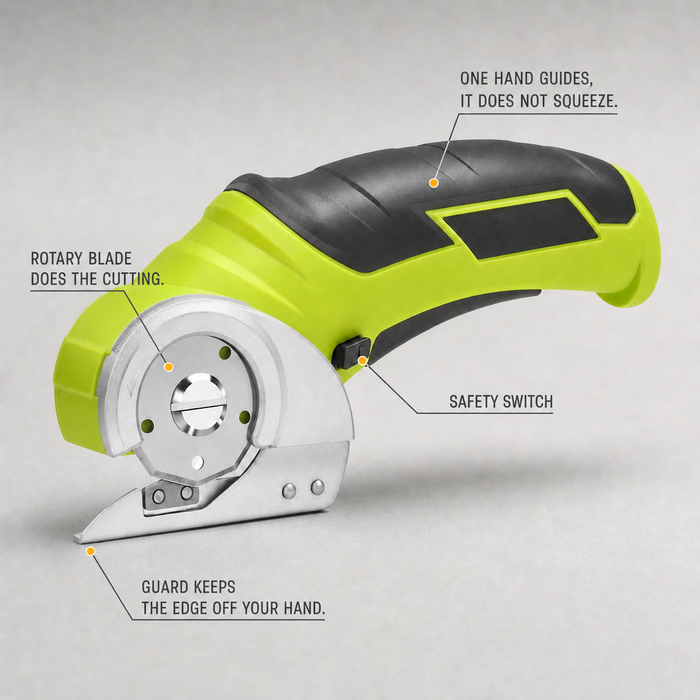
Box nine
People do not cut themselves on box one. They cut themselves on box nine.
The failure is cumulative. Your grip is doing the cutting, so it fatigues, and a tired grip is a slipping grip. That is why the injury and the giving up both arrive late in the stack rather than at the start of it.


Why it hurts
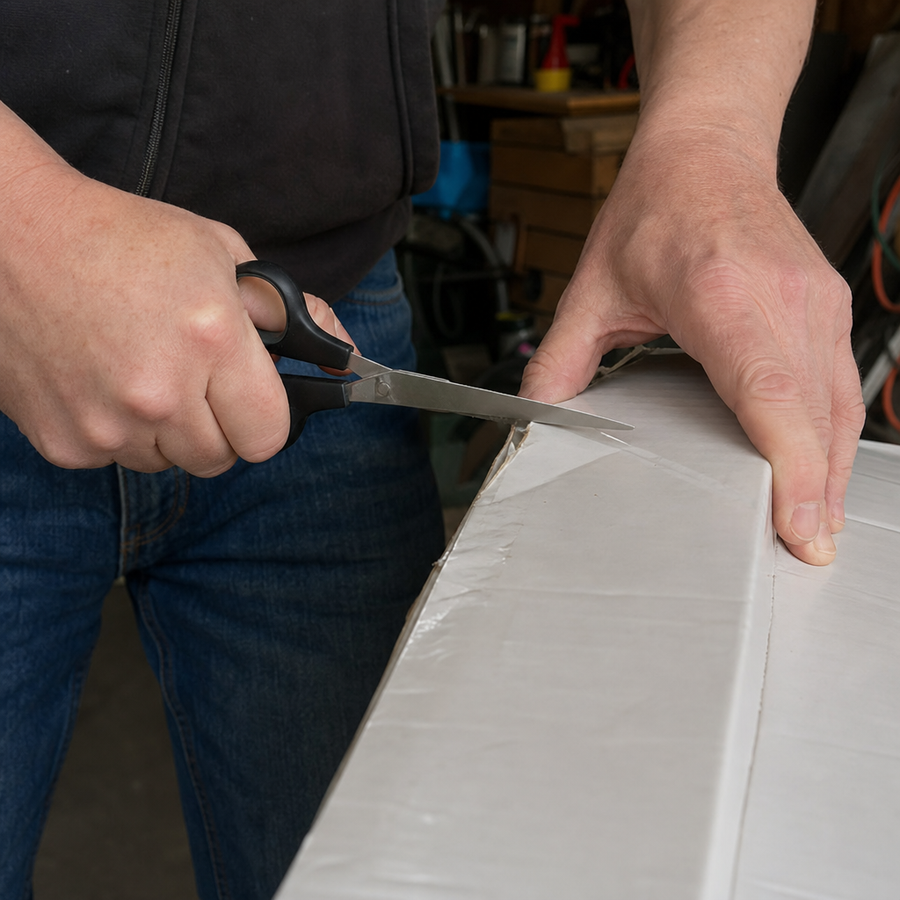
Scissors and a box cutter both ask one hand to generate the force and steer the line at the same time. Those are competing jobs and they run through the same small muscles and the same thumb joint.
That is why sharper scissors did not fix it, a fresh blade did not fix it, and better technique did not fix it. All three were variations on asking one hand to do two jobs.
Every previous fix you tried was a variation on the same wrong idea.
How it works
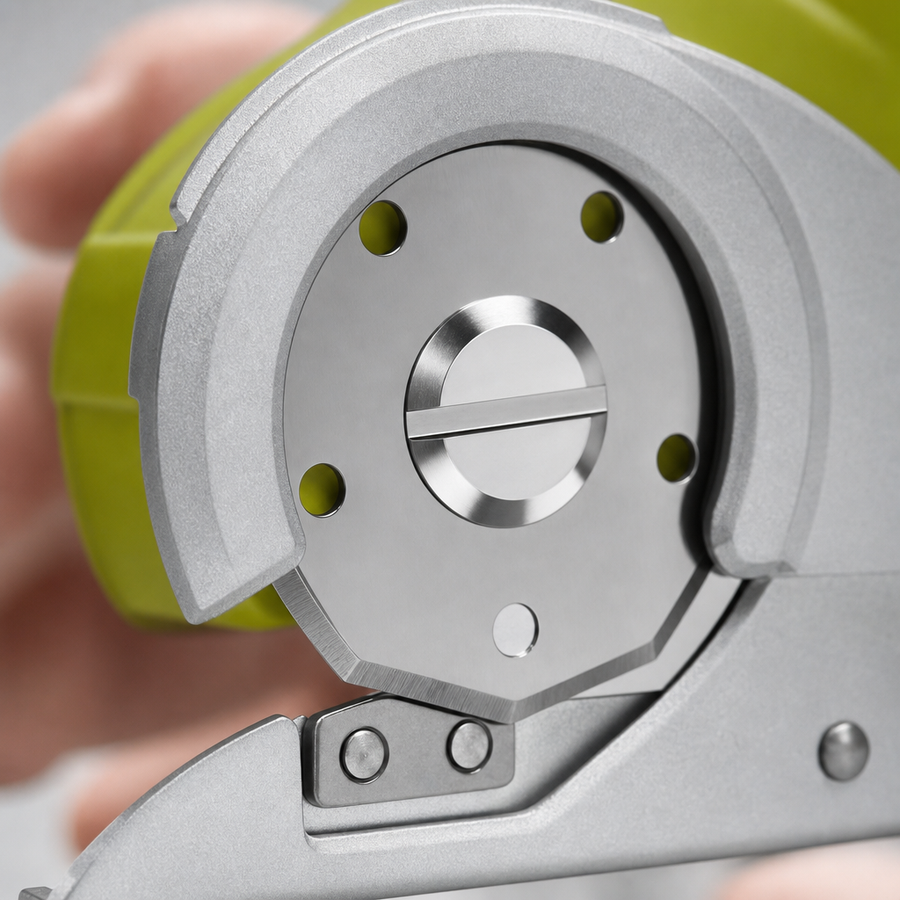
A powered rotary blade separates the two jobs. The motor makes the cutting force. Your hand is left with steering, which is the job a hand is actually good at.
The blade turns behind a metal guard, so the edge is not the part meeting your fingers. That is the difference people describe when they say nobody got cut this time.
Your grip stops being the engine. Squeeze nothing, just push.
Using it
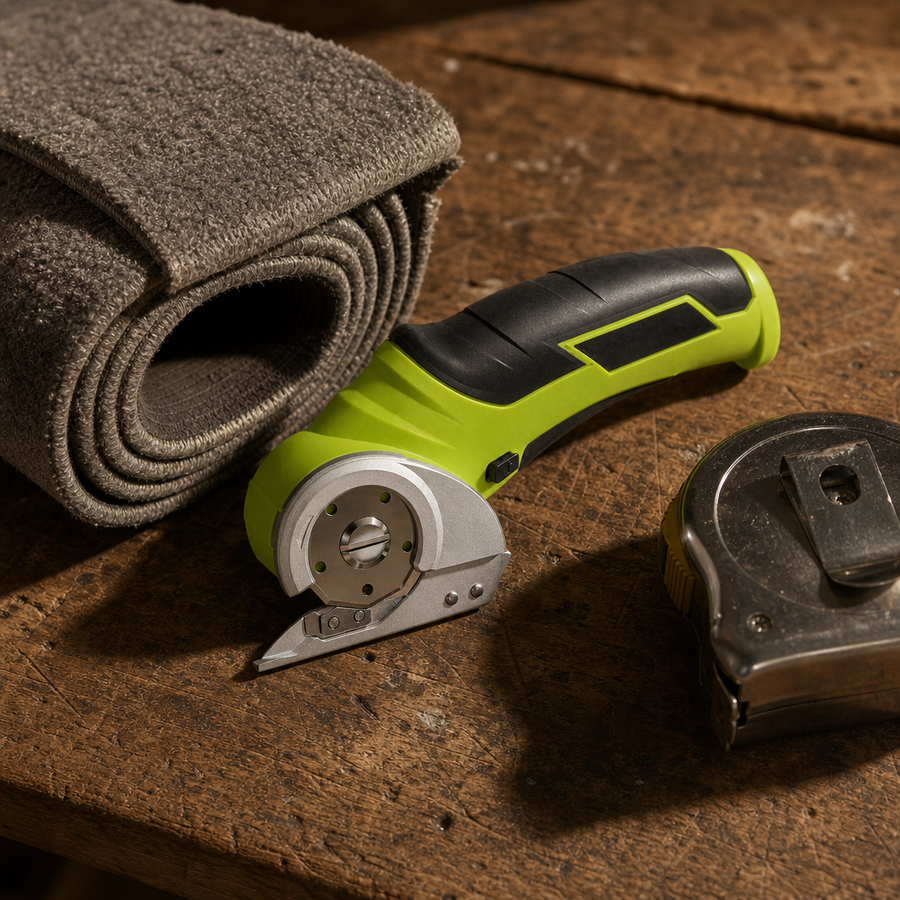
The first box: you will over steer it. The tool wants to travel and your instinct is still to push. Let it pull itself along the line and follow.
By the fiftieth: you are cutting a flat screen box down while something is on in the background, and the bin closes. This is the part reviewers describe rather than the first cut.
Straight lines are what it is for, and it takes them fast. Keep your shears for tight curves.
How to use it
There is almost no technique to learn. Charge it, set the guide against the material, and let the powered blade pull while your hand steers.
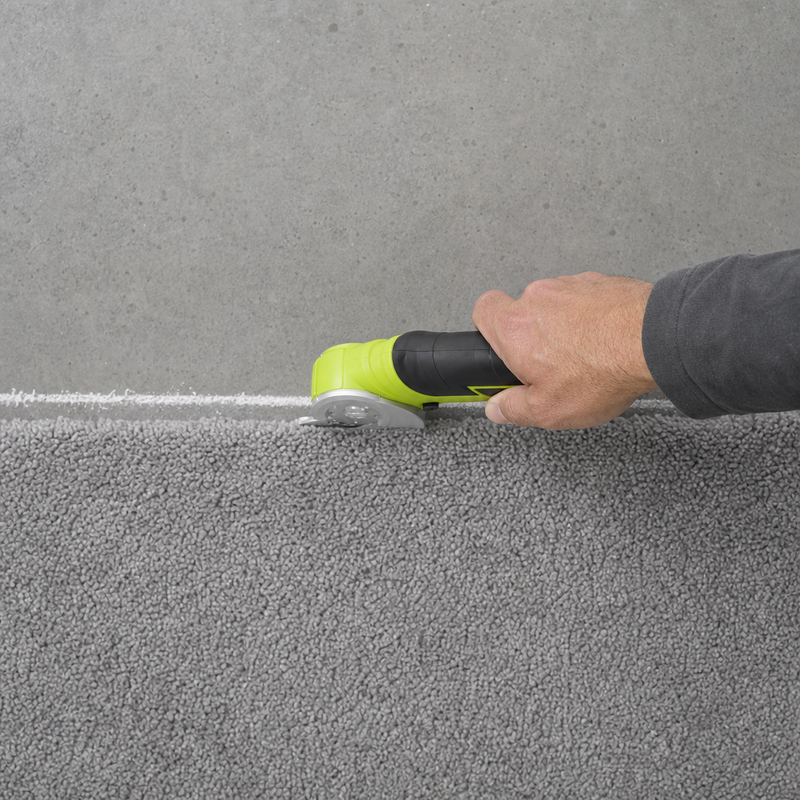
It arrives part charged. Give it a full charge before the first stack.
Set the blade on the edge of the board and let the tool travel. Your hand steers, it does not push.
The guard is the reason nobody gets cut. Do not work around it.
Against the alternatives
Named by category, not by brand, because the comparison is with the method rather than with anyone's product.
| CutPilot Pro | Household scissors | Utility knife | |
|---|---|---|---|
| Thick board | Powers through | Fights it | Needs force |
| Your hand | Guides only | Squeezes | Squeezes and slips |
| Blades | Rotary, no snapping blades | Blunts | Replace constantly |
| Cutting yourself | Edge stays behind a guard | Open blades | Open blade |
From the reviews
Quoted exactly as written, typos and all.
At 79 years of age, cutting boxes with knives & scissors was the bane of my existence - sometimes taking hours due to the stack that accumulated.
Marjorie H., 79
I have Arthritis in my thumbs so using this is so much easier than using regular scissors to cut/break down cardboard boxes.
Dena R., arthritic thumbs
Great tool cut about 1100 sq. Feet of wet carpet out of my flooded basement with ease!
Ray T., flooded basement
Super easy to use and no one got cut which is a normal occurrence for me when cutting boxes.
Curtis B., ships daily
There's so much more eoom in recycling bin now that I can cut things smaller.
Alice W., recycling bin
I am super pleased and will no longer dread amazon day!
Bev K., three deliveries a week
The price of this was a little high, but I wish I caved sooner.
Doug M., held off for months
Where has this been all my life!
Sandra L., moved last spring
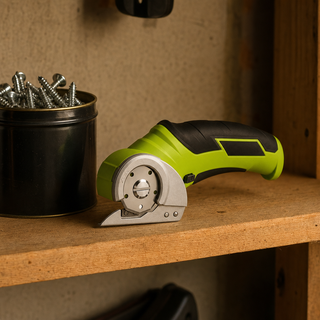
Take it to the stack that is actually in your garage. Sixty days, and if it does not empty that pile we will make it right.
Questions
No. It cuts straight lines. For tight curves you still want shears.
Separate them first. Padding clogs it.
Up to 6mm. That covers appliance boxes, moving boxes, pet food sacks and rug pad. On anything at the top of that range, score once and take a second pass rather than forcing it.
It is a rotary blade rather than a snap off one, so there is nothing to break off and replace between jobs.
It weighs 600g and is designed to be guided with one hand.
This is a cutting tool with a powered rotary blade behind a guard. Keep fingers and loose clothing clear of the blade, use the safety switch, and keep it away from children. It cuts straight lines rather than tight curves, and carpet should be separated from its padding before cutting because padding clogs it. It is not a substitute for a rated tool on a job that requires one.